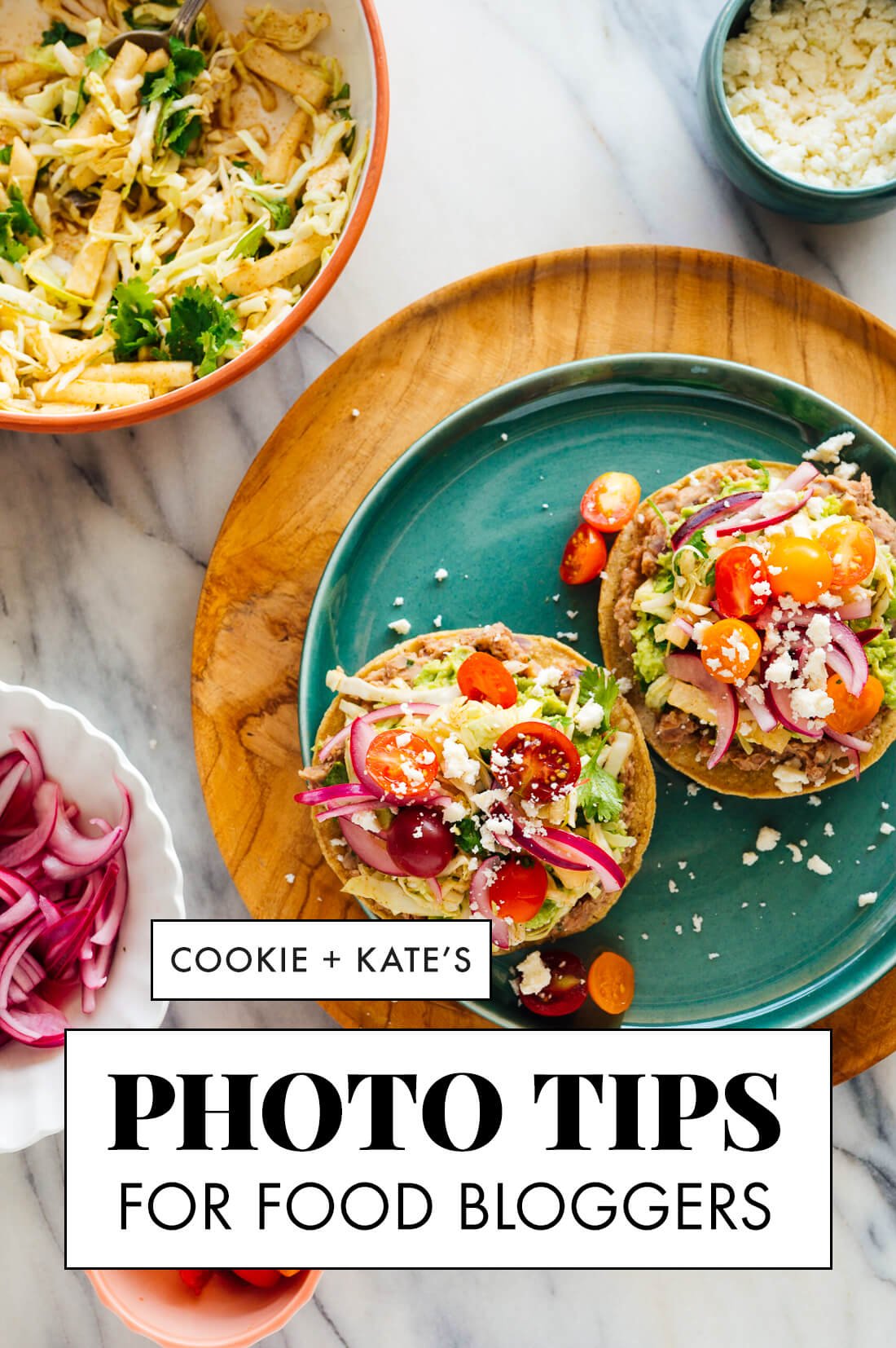
Photographing food is harder than it seems. My photos have improved with practice (lots and lots of it). Here are the best tips and tricks I can offer about food photography and equipment.
Please note that some of the links on this page are affiliate links. I only link to products I trust and recommend. Thank you for your support.
Tips for taking great food photos
It’s all about the light! My best tip for beginners is to become aware of the intensity of the light and how it hits the food, and learn to adjust accordingly. Here are some tips for getting started.
- Take photos under natural light. Do not use overhead lights or lamps or your built-in flash. Ever!
- Move around to find the best light source. Don’t feel confined to taking photos in your kitchen. Perhaps the light is best in your bedroom in the morning, and in your living room in the afternoon.
- Try taking photos from multiple angles. Some plates of food look better from above (like, pizza), or from the side (burgers), or at a 45-degree angle (drinks). Try moving around the plate and taking photos at various angles so you can pick your favorite later.
- Minimize clutter. If that spoon, napkin or busy background doesn’t add to the photo, it detracts from the photo. Focus on what is most important, but don’t zoom in so close that viewers can’t tell what the food is.
Troubleshooting common food photography issues
Frustrated by how your food photos are turning out? Read on for potential solutions.
- Your photos are blurry. Blurry photos are caused by camera shake. Solutions include: 1) hold your camera steadier (easier said than done), 2) use a tripod with a remote so your camera stays completely still while you’re shooting, 3) use a faster shutter speed, which will require opening up your aperture and/or moving to an area with more light, or 4) raise your ISO to decrease the amount of light needed (this will reduce image quality, however).
- Your colors aren’t true to life. When you’re editing your photos, if your plate of food looks very blue, yellow, pink or green, use your software’s white balance tools to fix it! Colors come alive when the white balance is set properly. If you shoot in RAW format, you’ll have an easier time adjusting color balance later.
- Your photos just don’t “pop” like professional food photos. Experienced food photographers use lenses that allow them to narrow their depth of field to highlight the subject of the photo. Then they use photography software to tweak the contrast, levels and sharpness of their photos. Sometimes a few little edits can really make a photo pop.
Read on for relatively inexpensive lens and software recommendations that can help you solve these problems and take amazing food photos.
Cameras for food photography
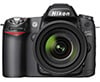 You don’t necessarily need a fancy camera to take appealing food photos. You can probably get by with a point-and-shoot camera for a while. Consult the user manual, use the macro setting and practice!
When you are ready to have full control over your exposure and focal length, save up for a DSLR camera (that’s short for digital single-lens reflex camera). It’s an investment, truly! I typically upgrade my camera about every four years, and currently use a Nikon Z6. It’s amazing.
If you can’t decide between a Nikon DSLR or Canon DSLR, the differences between the two are pretty minimal. Comparable models will produce photos of comparable quality, so choose the best camera available in your price range.
Before you buy, read reviews and go to a local photography store to try them out in person. If one brand’s cameras seem more user-friendly and feel more comfortable in your hand, go for that one. The lens you use for food photos will have more of an impact than the dSLR itself, so I recommend buying the camera body and lens separately.
Lenses for food photography
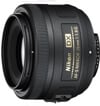 I prefer to use compact fixed lenses. Fixed means that the lenses do not zoom in or out, so I have to physically move myself closer or farther away from the subject.
I love fixed lenses because they are generally smaller, cheaper and faster than zoom lenses. They often offer wider apertures, which gives me greater control over depth of field and more flexibility while I’m shooting.
On my old cropped format camera, I used Nikon’s 35mm f1.8 and loved it. It produced sharper photos than my old 50mm and was easy enough to use for overhead photos of food on my table.
Now that I’ve upgraded to an expensive full-frame camera, I primarily use Nikon’s Nikkor Z 50mm f1.8 lens. This lens is designed specifically for Nikon’s Z-format cameras. If you have one of Nikon’s other full-format cameras, I’d recommend the 50mm f1.4 lens (the 50mm f1.8G lens is almost as good).
But wait, why did I move to a longer focal length when I upgraded cameras? Because a 35mm lens on a cropped format camera effectively acts as a 50mm lens on a full-frame camera. It’s confusing, I know. Unless you’ve spent thousands of dollars on a camera, your camera is probably a cropped format, but double-check to be sure.
Other photography equipment
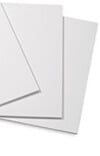 Reflectors and diffusers: I mostly use cheap white foam boards to bounce light back onto the plate and reduce shadows. You can also bring out more shadows by using a black foam board. I buy my foam boards at craft stores or Target. Sometimes I hang sheer white fabric over the window to soften the lighting source, too.
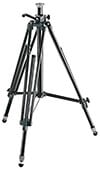 Quality tripod: I prefer to shoot with my camera in my hands for maximum freedom, but I’ve finally conceded that my tripod gives me greater control over my settings and helps ensure a super high quality (not grainy or blurry) photograph. To shoot my cookbook, I bought the Manfrotto Studio Pro Triman Tripod and a sturdy arm that lets me shoot overhead. I LOVE this setup!
You’ll probably need to get a tripod head for your tripod, too—I opted for the Manfrotto 322RC2 Joystick Head Short, which is so much easier to adjust than other tripod heads. Just one trigger instead of three knobs!
Recommended photography software
 I use Adobe Lightroom to organize and edit my digital photos. I don’t know what I would do without it! I prefer it to Photoshop because it helps me keep my files organized and easy to find, and provides exceptional control over exposure adjustments. It is also significantly less expensive than Photoshop.
Recommended photography books
 Pinch of Yum Tasty Food Photography eBook: A solid eBook about food photography (with videos!) by food blogger Lindsey of Pinch of Yum. She provides technical camera setting advice, composition tips, lighting tips, props and setup details, and photo editing and workflow tips.
The best part? You can watch videos of Lindsey shooting and editing photos, which are really helpful. Click here to purchase and download the Pinch of Yum Tasty Food Photography eBook for $29.
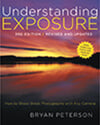 Understanding Exposure by Brian Peterson: If you really want to understand the fundamentals of photography, I recommend this book! The principles taught in this book can be applied to all photography situations.
Where to buy food photo props
Before you go prop shopping, think about what you want your style to be so you don’t waste your money on props that aren’t “you.” If you’re not sure what your photography style is yet, look to your wardrobe, décor and Pinterest boards for clues. Are you drawn to bright and colorful patterns, or clean lines and muted tones? Shop accordingly.
You don’t need a closet full of props for interesting food photos. You probably already have items at home that will look great in photos. Get creative! Vintage handkerchiefs can make fun napkins and well-worn baking sheets can make an interesting background.
Thrift stores and my parents’ kitchen have yielded some of my favorite finds. Etsy and eBay are treasure troves for unique, handmade or vintage food photo props. My favorite shops for new props and useful cooking tools are Crate and Barrel, West Elm, CB2, Williams-Sonoma, Sur la Table, Anthropologie, Target and Amazon.
More resources on Cookie and Kate
Additional food photography resources
- Principles of Photography series by White on Rice Couple
- Language of Photography Series by Gourmande in the Kitchen
- 12 Things That Have Helped My Food Photography by Bojon Gourmet
- 15 Essential Food Photography Tips from Andrew Scrivani
- Smitten Kitchen’s Approach to Food Photos
- Current Food Photography Styles and Trends: A Case Study by Stephanie Shih
- $15 Food Photography Lighting Set-up by Taylor Mathis
- 10 Affordable Everyday Food Photography Backgrounds by A Beautiful Plate
- 10 Household Tools That Can Improve Your Food Photography by Pinch of Yum
- How to Garnish Foods on How Stuff Works
- Todd Coleman’s Food Photography Tips
Questions? Feel free to leave them in the comments section below.

Cin
I made this recipe last night for a party today. It was a side dish for a sandwich themed lunch for my granddaughters birthday party. The black bean salad tasted amazing today. I’m glad I made it last night to let the flavors mingle. I doubled the recipe. I used dark and light kidney beans as well as black beans. I left out the jalapeños just because I didn’t know if that would be too hot for kids. I love the cilantro and lime flavors. There was a little left over, so I’m thinking of using it in burritos or tacos…. or maybe over some yellow rice. Thanks so much for the recipe. Love your site and pictures. Oh yeah, I also forwarded this recipe to a friend who commented on how much they liked it at the party.
Kate
Thank you!
Cin
Sorry, I just realized that I posted my comment on the wrong page. I do love your photos though! I will go back to the black bean salad recipe page and apply my stars. Thanks.
KG
Helpful information! What is the marbled white background in your photos? Is it your kitchen counter or a prop?
Kate
Hi KG! It’s a slab of marble I picked up at a stone store. I wish they were my counter tops, just not yet. :)
nita
Hi Kate! This is such a valuable mine of information. Thanks so much for generously sharing your knowledge and resources!
Kate
You’re very welcome, Nita!
DIDI Photos
Incredible.. great shots! Love what you are posting. Beautiful part of Food Photography!
Kate
Thank you!
Corey
Your photography tips regarding ISO and aperture are definitely assisting me. Thanks so much for sharing!
Kate
You’re welcome!
Cookiemomma
How do you feel about people taking pictures of handling food with ungloved hands? Just curious… is it just me or do you think this is a bad idea also?
Kate
I’m not sure what you mean? Sorry!
L_B
COOKIEMOMMA – I don’t think it’s a bad idea, since it’s an interesting take on food photography and getting a bit more involved. One would assume that the hands were washed prior to handling the food, and if it’s in your home, you are most probably going to be eating it yourself (and it will probably have been a friend or family members hands). If it’s a professional shoot, the food will most probably not be eaten anyway.
Daphy
Thank you very much for all of those resources ! very helpful !
Kate
You’re welcome.
annie
Thank you so much for sharing your experience and knowledge. I also started to use 50mm lens. Trying to get used to it now. I really loved your thoughts on Food Photography. It is a very interesting field for photographers. A lot of things to experiment and learn. Thanks again for the tips.
Kate
You’re welcome, Annie.
Fotografia Kulinarna - Piotr
And what do you think about Canon 100 mm f/2.8 IS USM Macro ? For me it is the basic lens for culinary photography. We use it every day – most of the photos in our portfolio on the site have been made just with this L series lens.
Autumn
Thanks! Exactly the information (and then some!) I was looking for :)
Kate
Wonderful, Autumn!
Éva - BitesOfBaking
Thank you so much for the tips, so useful! And I wasn’t aware about the fixed lenses that are better and cheaper and seem to be my next big purchase to improve my photography. Didn’t know your blog but I am coming back!
Kate
I’m happy to hear that! As you try recipes, let me know what you think.
Sierra Lopez
What an informative article. Thanks a lot for amazing
Kate
You’re welcome!
Kate
I’m sorry! I will take a look. It could be they no longer have that item.
Ajay Wlaia
Thank you most for this! i have been attempting to work out the simplest ways in which to photograph a number of my food and this was thus helpful! nice tips, will certainly be golf stroke them into observe as I be after my diary.
Kate
You’re welcome!
Kate
I’m glad you found this helpful!
Amy Estes
Great tips! Thank you so much!
Kate
You’re welcome, Amy!
Aneesa
Hi
I came across your blog randomly. But it has been eye opening. I have now started my own but not yet publicised it till I figure it all out. I have been enjoying it so far. Thank you.
Kate
I’m glad this was helpful!
Kate
Good luck with our blog, Jason!
Jon Cho
Thank you for all the tips. All those resources are a god-send.
Maria
So very helpful! Thanks for all the useful information.
Kate
You’re welcome, Maria!
Andreea Floricel
Thank you for creating this content for all the newbies! I’m on my way to switch from a free WordPress theme and domain and I want to make it right from a branding perspective and to reflect on what I want to do with it. I’ll bookmark this to come back to it :)
Kate
You’re welcome! I’m glad it was helpful.
Annie
Thank you so much for sharing your experience and knowledge. I really loved your thoughts on Food Photography. This is a field of photography where a lot of things to experiment and learn. I was planning to start food photography. Your tips will definitely help me a lot to do good in this field. I appreciate your work.
Kate
You’re welcome! I’m glad you have found it helpful.
Dana
The links to your eBay guides aren’t working. Are your guides posted elsewhere?
Kate
Hi Dana, This is an older post so it is possible the site holder has taken the content down. I will do some investigating.
Newbie
Hi Kate,
I was wondering if you have a recommendation for lighting equipment. Or is it even necessary?
Thanks,
newbie photography
Kate
I use natural light, right now so I don’t have any other lighting recommendations.
Pavitra
I am not a food blogger. But i love food photography. I am using your tips. Really helpful. Thanks for sharing.
Milind vachhani
It’s amazing article. So I would you like to share your article in my website with your copyright.
Thank you for sharing.
trent
pre skux site
Andraz
Not a blogger, but great article. Great ideas for food photography.
ishika varma
You have written a good post and I will appreciate it, it is a post worth praising, so I want to tell your post that it is very good post, I have seen such posts very rarely, seeing your post, let me write my post Will get even more inspiration.
Candace Lawrence
Hi Kate. Longing to try your olive oil shortbread since I love shortbread & my husband is vegan. I too had a grandmother called Mimi (the story was, I couldn’t say grandma, but I believe it was because she was too vain to want to be called grandma at 40, when I was born). But she cooked stuffed cabbage and blintzes because she was a Polish Jew.
I wanted also to comment that you mention Scotch food–I lived in the UK years where the Scots insisted that Scotch was a drink, and everything else was described as Scot or Scottish. (This bit is to keep you from getting yelled at when you visit Scotland.)
I too love dogs (cats too) and have 4 dogs, 3 cats. I do a lot of rescue work as well. Why not get a foster for you and Cookie?
Off to try my shortbread. Will let you know. I’m a wretched baker but I plan to follow your instructions carefully. Thanks for the idea.
Candace
Swathi
This is so much information, thanks alot.
Rebecca
Hi Kate: I am both a hobby cook and professional headshot and portrait photographer. I understand the whole basis for lighting food that will flatter the color, texture and flavors (even if you can’t taste it). But if you are also the cook, how do you spend hours over a hot stove or oven creating a recipe masterpiece and still have time to set up props and lighting to photograph the food with the family yelling “is it dinner yet?”) in the background. I barely have time (and energy) to plate and style my food and then use my iPhone to take a picture. It seems all food photography lessons center on the photographer just pushing the shutter but doesn’t get involved in cooking at all. What’s your secret?
Kate
iI Rebecca! It takes a lot of testing and getting the recipe just right prior to taking the photos. It takes a lot of time and attention to detail on both sides. No secret, just a lot of work and learning over the years!
Rani - LoneStarGatherings.com
Kate – Thank you for this information. I am a new food and wine blogger and really good food pictures are a challenge! I appreciate this information especially the resources at the bottom of the post!
Two Questions: Are you currently using the Adobe lightroom subscription? And second, what photo editor did you use prior to Lightroom? Thank you for your time and information.
PS. Great recipes too!
Kate
Hi Rani! I’m currently using Lightroom and have for sometime now. Good luck!
Nidhal Mahdhi
Thank you for sharing this!
I really appreciate it! I’m looking for a lot of food photography resources these days to start a related business and I have come through this guide as well.
April
Thank you Kate! This was such a useful and compact articleI bought Pinch of Yum’s photography tips book as per your recommendation and it’s great too. Thank you so much!
James Liam
your photography quite excellent.Thanks for sharing.
Rik Myślewski
As a photographer myself — who, has gotten seriously into macro photography — I was quite impressed with your post. Wonderfully done. My only suggestion — not direction, just suggestion — would be to add Nikon’s Camera Control Pro 2 software to your arsenal. When I’m capturing, say, two-second, tight f-stop images, it (along with Nikon’s ViewNX) makes life a lot happier. Shoot on!
Daniel
Thank you so much! I’m starting a food blog and these references will help me a lot!
Convivium Photo
Awesome tips for food bloggers on how take food photographs..!
ishi nora
Thank you for sharing this super helpful blog
ishi nora
What a generous writer, photographer and cook you are!!! Thank you.
James
I really enjoyed reading this article. I’ll get a information of use out of the tools you listed.
Zenith Clipping
Your information is a very helpful.